Xavier Intes (RPI) and Margarida Barroso (AMC) have been selected for funding of a new National Cancer Institute (NCI) R01 grant focusing on "Role of tumor biomechanics on drug-receptor engagement". This is fantastic news, particularly considering the current funding climate and the historically competitive nature of NCI.
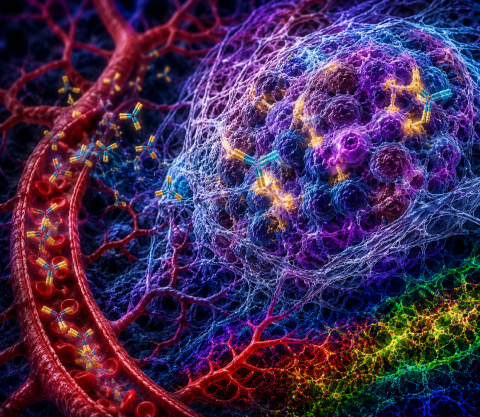
This is a 5-year grant with a budget of $3.9M and it is a joint MPI effort between RPI, where Xavier is PI and AMC, where Margarida serves as the PD. This is the 7th large NIH grant that Xavier and Margarida have secured to support their thriving cross-institutional collaboration, and it further strengthens the CeMSIM-CTI collaboration in translational imaging. This project will establish mFLIO², a first-in-class multimodal imaging platform that simultaneously maps antibody–target engagement, tumor biomechanics, and vascular architecture within intact tumors. By revealing how ECM stiffness and vascular dysfunction limit trastuzumab delivery and HER2 binding independently of receptor expression, they will redefine determinants of therapeutic response in HER2-positive breast cancer. The resulting mechanobiology-informed biomarkers and therapeutic strategies will advance precision oncology by enabling rational modulation of the tumor microenvironment to improve antibody efficacy across solid tumors.
Together, Xavier and Margarida have successfully secured funding and produced impactful academic output, earning visibility for their contributions in engineering and imaging in cancer. Indeed, they were recognized by NCI as Associate Members of the Cellular Cancer Biology Imaging Research (CCBIR) program.
Some specifics about this grant:
Title: Role of tumor biomechanics on drug-receptor engagement
PIs: Barroso, Margarida (Contact); Intes, Xavier
Total Federal & Non-Federal Funds* $3,906,344.00
1R01CA308771-01A1
Narrative
Breast cancers that overexpress the epithelial growth factor receptor 2 (HER2) often develop resistance to
current antibody-based therapies due to physical and vascular barriers within the tumor microenvironment
(TME). This project will develop and apply an innovative multimodal imaging technology, mFLIO², that uniquely
integrates molecular, biomechanical, and structural imaging to quantify how tumor stiffness and vascular
organization affect drug delivery and new interventions to mitigate its impact of therapeutic response. By
identifying how TME mechanics regulate antibody accessibility, this research will advance precision strategies
to overcome resistance and improve outcomes for patients with HER2-positive cancers.